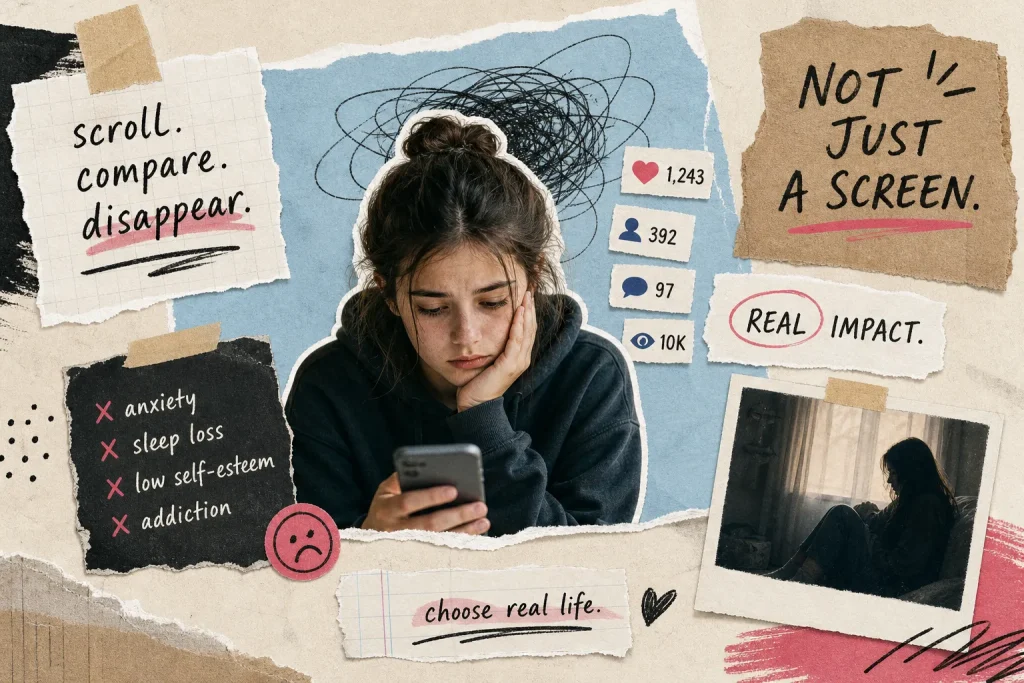
Fiction is one of the most underused tools we have for helping young readers think critically about technology, algorithms, and social media. Not because a well-chosen novel moralizes, but because it immerses. A teen who finishes a book about viral humiliation has lived through that experience in the safest way possible: inside someone else’s story. This guide is for parents, educators, and teens who want books that both entertain and illuminate. The picks here range from gripping YA mysteries to middle-grade page-turners to nonfiction companions, all chosen because they frame digital citizenship in the best possible way: one where the teen actually wants to turn the page.
One title stands out above the rest, chosen for its pre-publication attention, robust classroom resources, and direct engagement with the technology issues teens face right now. We’ll get to it shortly. But first, the books that started this conversation.
When the feed becomes the story: YA fiction about social media addiction
The best YA novels about social media don’t start with a warning label. They start with a character whose feed looks perfect, whose follower count feels like proof of something, and whose real life is quietly unraveling. That gap between the curated self and the actual self is where these stories live, and it’s the reason teens recognize themselves on the page even when they’d never admit it out loud.
Books that show the real cost of a curated online life
Influence by Sara Shepard and Lilia Buckingham follows four young influencers navigating the distance between their polished online personas and the messier reality underneath. It’s a strong pick for grades 8 through 12, especially for teens who are deep into Instagram or TikTok culture. Bad Like Us by Gabriella Lepore covers similar emotional territory: a picture-perfect social media life, a memoir in the works, and the performance anxiety that comes with being constantly visible. Both books do something valuable by making the reader feel the weight of that performance rather than just describing it.
For a slightly younger reader who’s just starting to navigate public online identity, Zoe Sugg’s Girl Online is a widely recognized exploration of online privacy and internet fame, suitable for readers in the grades 7, 10 range. It’s accessible, honest, and doesn’t require a high thriller tolerance to get through.
Cyberbullying in the algorithm: what the best books get right
The Rumor Game by Dhonielle Clayton and Sona Charaipotra is the strongest pick in this category for understanding how social media enables cruelty at scale. Set at an elite prep school, it captures the speed at which a digital rumor spreads, the way accountability disappears in a mob, and the very specific horror of watching your reputation collapse in real time. It’s best for grades 8 through 12, and it resonates especially with teens who’ve witnessed or experienced school-based cyberbullying. Going Dark by Melissa De La Cruz takes a thriller approach: an influencer disappears, and her digital life becomes both the mystery and the motive. Best for grade 9 and up, it works well for readers who need plot momentum to stay engaged.
Top YA books that help teens understand the dangers of technology: featured pick
Most books in this space teach about technology. Accidental Tribes by C.S. Pascoal, published by Prospera Books and launching September 22, 2026, puts the reader inside it. That’s a meaningful distinction, and it’s why this novel stands apart from everything else on this list.
What the story actually does
The premise: eight defiant teenagers are sent to a forgotten classroom called Solitaria, where they begin uncovering secrets involving an unsolved death, stolen funds, hacked systems, and institutional lies. According to the publisher’s description, AI-generated content, anonymous accounts, and viral humiliation are woven directly into the plot mechanics that drive the mystery forward, which means readers experience the stakes of those tools rather than simply being told they’re dangerous. Early reviewers have praised the book’s propulsive pacing and ensemble cast for making it genuinely binge-worthy, not just educational. Pre-orders are open ahead of the September 22, 2026 launch, and free first chapters are available online for teens who want to try before they commit.
The ensemble cast of eight distinct characters is one of the book’s real strengths. Teens who feel like they don’t fit a single mold will find someone on that page who reflects them back, which is exactly the kind of hook that keeps reluctant readers reading.
Why educators and parents keep recommending it
The Children’s Book Review called Accidental Tribes “fast-paced, compelling, and sharply relevant,” and Midwest Book Review also praised the novel ahead of publication. Prospera Books has classroom and library resources specifically designed to facilitate discussion around AI literacy, digital citizenship, and identity. That makes it a practical choice for teachers who need curriculum utility alongside a story students will actually read. For fans of One of Us Is Lying by Karen McManus, this is the book that brings those same ensemble-thriller instincts while grounding them in the technology issues teens face right now. Marketed as a YA title for teen readers, it works equally well in a classroom, a book club, or a teenager’s bedroom at midnight.
AI, algorithms, and hacked systems: books for the tech-curious reader
Social media is only part of the digital world teens are navigating. Artificial intelligence, automated systems, and algorithmic manipulation are already shaping their school experience, their information diet, and their sense of what’s real. The books in this section widen the lens, and they’re among the strongest nonfiction books about kids and technology and YA fiction available right now.
Middle-grade picks that make tech risks click for younger readers
AI Incident does exactly what its title promises: a middle school deploys an AI robot to improve test scores, and the hype doesn’t survive contact with reality. It’s a fast, funny, and genuinely useful conversation-starter for grades 6 through 8 about what happens when technology is adopted without thinking through human cost. Click’d takes a different angle, using a camp app that unexpectedly threatens to expose students’ secrets to explore app culture, unintended consequences, and trust. Friend Me centers on an online friendship that turns dangerous, and its mystery pacing makes it accessible for less enthusiastic readers who need a plot to hold their attention. All three books open conversations about privacy, consent, and the gap between what technology promises and what it delivers.
YA graphic novels and reluctant-reader-friendly formats
Me & Banksy tackles security cameras, hacking, and privacy in a middle-grade format that pairs visual storytelling with real substance. Gamerville, available as a middle-grade graphic novel, focuses specifically on the perils of gaming culture and tech immersion. For teens who balk at prose-heavy books, both titles remove the format barrier without removing the conversation. Many of these high-concept tech titles are also available as audiobooks, worth considering for teens who absorb stories better by ear, since the plot momentum in this genre does much of the heavy lifting.
When story isn’t enough: nonfiction picks to go deeper
Fiction opens the door. Nonfiction explains what’s behind it. The best approach combines both, especially for parents and educators who want to facilitate real conversations rather than just hand over a book and hope for the best.
Teen-friendly nonfiction about screen time and digital wellbeing
Digital Zen: Teen Mindfulness in the Age of Social Media by Sherlin Bennett (2024) is designed for teens to use independently, not just for adults to press into their hands. It approaches social media navigation through a mindfulness lens, which makes it feel like a tool rather than a lecture. The Phone Book by Jessica Speer (2023) takes a more practical, strategy-focused approach to smart phone use and digital habits, and it’s accessible enough for middle school readers. The Teenage Guide to Digital Wellbeing by Tanya Goodin (2024) is written explicitly for teenagers about healthy digital habits, covering the emotional and behavioral dimensions of screen time without being preachy about it.
Nonfiction for parents who want to understand the design side
Irresistible: The Rise of Addictive Technology and the Business of Keeping Us Hooked by Adam Alter is a clear-eyed explanation of how addictive technology is built intentionally, not accidentally. It’s best for parents and older teens in grades 10 and up. Understanding the design logic behind apps and platforms changes the conversation adults can have with teenagers: less “put your phone down” and more “here’s exactly why the app is engineered to make that hard.” That shift in framing tends to resonate better with teens, who are generally quicker to engage when they feel informed rather than managed.
How to turn these reads into actual conversations
A book that sits unread on a nightstand doesn’t help anyone. The goal isn’t to assign reading; it’s to create the conditions for a real exchange. That looks different in a classroom than it does at a dinner table, but the principle is the same: start with curiosity, not correction.
Questions that open the conversation without sounding like homework
A few prompts that work across most of the books on this list: What would you have done differently if you were that character? Did anything in that story remind you of someone at your school? Which part felt most realistic about how technology actually works? These aren’t quiz questions. They’re dinner-table questions, car-ride questions, text-a-friend-after-finishing-the-book questions. Accidental Tribes includes educator discussion resources specifically built around AI and digital citizenship themes, so teachers don’t have to build the conversation from scratch. It’s one of the clearest examples of a book designed to work as hard in a classroom as it does in a teen’s hands.
Where to find official guides and educator resources
Publisher websites and back-of-book materials are the first place to check for structured discussion guides. Bookclubs.com offers downloadable PDFs for many contemporary titles, and ReadingGroupGuides.com maintains a solid archive of fiction-specific discussion questions. Facing History provides identity-focused discussion questions that work especially well for books touching on belonging and systemic harm. For Accidental Tribes specifically, Prospera Books has dedicated classroom and library materials for teachers facilitating discussions on AI literacy and social-emotional learning. Librarians looking to expand their school collections for the 2026, 2027 year will find those resources worth requesting before back-to-school season fully hits.
The book a teen chooses to finish is worth more than the pamphlet they ignore
That’s the whole argument, really. Digital safety pamphlets live in binders. Good books live in readers’ heads for years. The range covered here, from social media fiction to AI-centered mysteries to middle-grade page-turners to nonfiction companions, is wide on purpose. The best entry point is always the one the teen will actually read.
Of all the YA books that help teens understand the dangers of technology, Accidental Tribes by C.S. Pascoal brings together the most relevant themes in the most immersive format available for the 2026 back-to-school season. It launches September 22, 2026, and free first chapters are accessible online right now. Let your teen read the opening and make the call. That’s already a different kind of conversation than a lecture about screen time, and it’s the kind that actually gets somewhere.
The goal was never to scare teens away from technology. It’s to raise readers who think clearly about how it works, who built it, and who it actually serves. Fiction, at its best, is exactly the tool for that job.