
If your teenager asks a chatbot for help with homework, health, or a friendship problem, it’s understandable to wonder what they’re getting in return. And if you steer them toward a search engine instead, you may still worry about what they’ll find.
There’s no single answer for every teen or every tool. Search engines and AI chatbots work differently, so each brings different risks. Understanding that difference can help your family make thoughtful choices without treating technology, or teenagers, as the problem.
How are AI chatbots different from search engines?
A conventional search engine finds and ranks webpages that may match a query. Google describes its search process as crawling pages, organizing information in an index, and serving results it considers relevant. Those results are links to sources teens can open and assess, not a guarantee that a page is accurate or safe. You can read Google’s explanation of how Search works.
A generative AI chatbot, by contrast, creates a response in conversation. It can explain a topic in a friendly, tailored way, but a fluent answer is not proof that it’s correct. Some chatbots can also browse the web or show citations, and search engines may display AI-generated summaries. The boundary is increasingly blurry, so it’s worth checking whether a tool is generating an answer, showing sources, or doing both.
These tools are already part of many teens’ lives. In a nationally representative survey of U.S. teens ages 13 to 17, Pew Research Center found that 64% had used an AI chatbot. About three in ten said they used one daily. That doesn’t tell us whether use is helpful or harmful; it does make practical guidance useful.
Which is riskier: an AI chatbot or a search engine?
For checking a factual claim, a traditional search engine is often the better starting point: it can show multiple sources for comparison. But search results can lead to misleading or inappropriate pages, too. A chatbot may feel easier to use, yet it can deliver a wrong answer in a confident, personal-sounding voice.
The honest answer is that risk depends on the task, the teen, and the specific tool. A search engine may be more useful for finding original sources. A chatbot may be helpful for brainstorming or getting a difficult idea explained in simpler language. Neither should be treated as an unquestionable authority.
1. Wrong answers can look convincing
A chatbot can get details wrong, mix up sources, or present uncertain information as settled. If it includes citations, those still need checking: teens should open the cited material and make sure it actually supports the answer.
Search engines have a different weakness. A page can rank prominently without being reliable, and a list of links can put the burden of judging sources on the person searching. AI-generated summaries can make the distinction harder by presenting a synthesized response above the links.

A useful habit: pause, find the original source, check its author and date, and compare the claim with another reliable source. For health or safety questions, help your teen turn to a qualified professional or a reputable health service rather than relying on a chatbot or a quick search.
2. Inappropriate content can appear in different ways
Search engines may lead to pages with sexual, violent, hateful, or otherwise upsetting material, depending on the query and results. Content filters can reduce some exposure, but they can’t guarantee that every result will be suitable.
Chatbots may also respond with material a teen shouldn’t see. It’s helpful to distinguish ordinary assistants from AI companion products designed to simulate friendship or intimacy. Those are not all the same kind of tool. The eSafety Commissioner’s guidance on chatbots and companions discusses risks for young people, including inappropriate interactions and advice. The FTC has also examined how AI companion companies handle children’s safety and personal information.
It’s reasonable to use age-appropriate filters and account settings. Just as important is making it easy for your teen to tell you when something disturbing shows up, without fearing an automatic loss of privacy or device access.
3. Privacy deserves attention in both places
Search engines and chatbots can have different data practices, and those practices vary by provider, account, settings, and product. A chatbot conversation may feel private because it happens one-on-one. But it isn’t the same as a confidential conversation with a trusted adult or professional. Before using a tool, check its age requirements and privacy settings, including whether conversations may be stored or used to improve the service.

A simple family rule can help: don’t enter full names, addresses, passwords, school details, precise locations, private photos, or sensitive health and relationship information into a tool unless you have a clear reason and understand its privacy terms. UNICEF’s guidance on AI and children highlights safety, privacy, transparency, accountability, and children’s well-being as important considerations.
4. Over-reliance can get in the way of learning and connection
A chatbot can be a useful starting point for a school topic. It can also make it tempting to accept an answer without understanding it, or to let the tool do the thinking. Search engines can encourage a similar shortcut: scanning snippets instead of reading and comparing sources.
Companion chatbots raise an additional concern because their conversational style can feel like a relationship. That doesn’t mean every teen who uses one is at risk of becoming dependent. It does mean parents should pay attention if a tool starts replacing sleep, schoolwork, friendships, or reaching out to trusted people.
Try asking: “What did it help you figure out?” rather than only “How much time were you on it?” The first question invites your teen to reflect on their use and keeps the conversation open.
A simple family routine: pause, check, decide
You don’t need a complicated rulebook to help your teen use these tools more thoughtfully. Try this three-step routine:
- Pause: Is this a low-stakes question, or could the answer affect someone’s safety, health, money, or privacy?
- Check: Where did the answer come from? Can you open the original source and confirm the important details elsewhere?
- Decide: What will you do with the information? For consequential decisions, bring in a trusted adult or qualified professional.
For schoolwork, your teen might ask a chatbot to explain a concept, then use assigned materials or a reliable source to check it. They should be able to explain the idea in their own words and follow their teacher’s rules about AI assistance. Pew found that 26% of U.S. teens surveyed had used ChatGPT for schoolwork in 2024. A conversation about how they’re using a tool may be more helpful than assuming either that all use is cheating or that every AI answer is trustworthy.
Help your teen practice digital judgment
In Accidental Tribes, eight teenagers enter Experiment 359 inside Solitaria and encounter a world shaped by digital choices, including AI-generated humiliation and questions about what is real. The mystery puts a familiar challenge into story form: when a post or image feels convincing, what would help you verify it before you share or act?
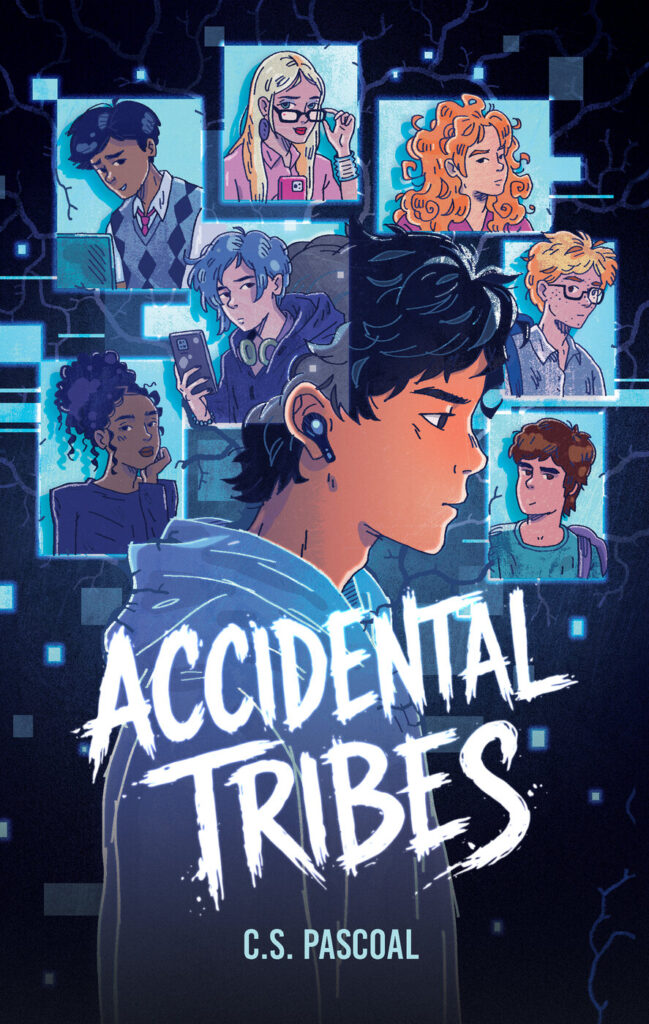
That question can be a good place to start with your teen, too. Invite them to show you how they tell the difference between a generated answer, a source, and an opinion. Talk about what information stays private and who they’d turn to if a tool gave them troubling advice.
For a classroom or family conversation, Accidental Tribes’ free educator resources include discussion guides designed to connect the story with teens’ real digital lives.
The goal isn’t to choose one tool and assume the other is safe. It’s to help teens use both with curiosity, care, and a habit of checking before they trust.