The most effective way to talk to teens about peer pressure is to listen first, validate the social reality they’re living in, and then introduce practical tools. Skip the lecture. What your teen needs is a parent who sounds like an ally, not a prosecutor. Research on talking with adolescents consistently points to a connect-before-correcting approach as far more effective than leading with rules or accusation, and that insight shapes every strategy in this guide.
Many peer pressure conversations go sideways not because parents say the wrong thing, but because they say it in the wrong order and at the wrong moment. This guide gives you age-matched approaches, real scripts your teen can borrow, role-play techniques backed by research, and one tool educators and counselors have used for years to open difficult discussions: a good novel.
Key takeaways
- Listen before correcting: Starting with curiosity rather than accusation keeps teen defenses down and conversations open.
- Age changes everything: The right approach at 11 looks very different from the right approach at 17. Match your strategy to the developmental stage.
- Scripts work: Practicing specific, preplanned refusals improves teens’ ability to say no under real pressure.
- Setting matters: Car rides, walks, and side-by-side activities tend to produce more honest conversations than formal sit-down talks.
- Build an exit plan: A no-questions-asked code word removes a major barrier to teens calling for help: fear of the lecture that follows.
- Use fiction as a proxy: Character-driven stories let teens examine peer pressure with their defenses down, opening conversations that lectures never could.
Why peer pressure conversations usually go sideways
The tone problem nobody talks about
Leading with concern that sounds like accusation (“Were you at that party?”) triggers a teen’s defense system before the conversation even starts. Curiosity-first language works far better. “What happened?” lands differently than “Why would you do that?” One opens a door; the other slams it.
The useful rule here is connect before correcting. Make your teen feel heard first, and discuss rules, consequences, or solutions afterward. This isn’t soft parenting; it’s strategic parenting. Tone, body language, and simply allowing your teen to finish speaking matter as much as the words you choose.
What “defensive” actually means in a teen’s brain
During the teen years, the brain weighs peer opinion heavily and reads threats to independence as genuine risks. A conversation that feels like a trap activates shutdown, not reflection. This isn’t attitude; it’s development. Knowing this helps you reframe your internal question from “why won’t they listen” to “how do I make it safe to talk.”
The timing and setting advantage
Car rides, walks, and side-by-side activities often produce more honest conversations than formal sit-down talks. When eye contact isn’t mandatory and exits don’t feel locked, the conversation flows differently. Plan your best peer pressure talks for those in-between moments, not the dining room table with everyone seated and waiting.
How to talk to teens about peer pressure at every age
Peer pressure susceptibility follows a recognizable developmental arc. It rises through early adolescence, peaks in the middle teen years, and gradually declines as identity and self-regulation strengthen. The same conversation needs different packaging depending on where your teen is right now.
| Age range | What pressure looks like | What works best |
|---|---|---|
| 11–13 | Peer approval feels urgent; fitting in can override judgment. Pressure shows up as exclusion, online behavior, dares, and trying risky activities. | Teach and rehearse specific scripts. Use present-day scenarios: “What would you do if everyone was watching?” State safety rules clearly without turning every exchange into a lecture. |
| 14–16 | Pressure operates indirectly through group norms, social modeling, and fear of embarrassment. This is the highest-vulnerability period for risky choices. | Validate before problem-solving. Try: “I get why saying no in front of everyone sounds awful. What option protects you without humiliating you?” Discuss trade-offs, not just rules. |
| 17–18 | Direct conformity declines, but peer groups still shape substance use, relationships, and big decisions. Identity is forming, not finished. | Shift from parent-as-authority to parent-as-consultant. “Does this fit who you’re becoming?” lands very differently than “Because I said so.” |
According to EVERFI, about 90% of teens experience peer pressure at some point. That number spans all three stages in the table above. Your teen is navigating this, regardless of how well-adjusted they seem from the outside.
Scripts your teen can actually use in the moment
A field study with seventh graders found that teaching refusal strategies and rehearsing them improved refusal behavior, while motivation alone did not. Teens don’t need inspiration; they need language they can grab when their brain is flooded with social pressure. Give them the words now, before they need them.
Refusal scripts for middle school
For ages 11 to 13, brevity is a strength. Walk through the “no, reason, alternative, leave” sequence together: state the refusal, offer a brief optional reason, suggest something else, and exit if pressure continues. Effective short scripts include “No thanks, I’m not doing that,” “Nah, I’m good,” and “That’s not for me.” The Gottman Institute has more ideas for helping teens say no to friends. Your teen doesn’t owe their peers a long explanation. Short is effective, and practicing these lines out loud makes them stick.
High school scripts: when the stakes get higher
Older teens need refusals tied to personal stakes, not just rules. Scripts like “I’m not risking my license, my grades, or my record” and “I’m not comfortable, I’m heading out” connect the refusal to something the teen actually cares about. For digital situations, “Don’t send me pictures like that” is direct and final. The key difference from middle school scripts is tying the refusal to the teen’s own future, not a parent’s expectation.
The broken-record technique
The method is simple: repeat the same short line without debating. “No, thanks.” Pause. “I said no.” Pause. “I’m leaving.” No justification required, no argument entered. As KidsHealth notes, with good friends you shouldn’t have to explain or apologize for saying no. Practice this with your teen before it’s needed, so the words come automatically when the pressure is real.
How to practice without it feeling like therapy
Structured, coached, repeated practice with feedback is what actually builds refusal skills. Good news: it doesn’t have to be awkward to work.
Reframe role-play as a quick drill, not a dramatic exercise. “Let me be your annoying friend for two minutes” is disarming. Let your teen choose their own wording rather than memorizing a parent-approved script; the goal is language that sounds like them. Coach with “Which response sounds most like you?” and run the scenario. Offer feedback without judgment, then move on. Keep it under five minutes, and you’ll both survive it.
Beyond practice, build one concrete safety tool together: a code word or text that means “come get me right now, no interrogation tonight.” Set the terms in advance. If your teen sends the code, you come, and the conversation happens tomorrow. This removes a major barrier to teens calling for help: fear of the lecture that follows. The plan only works if you honor it every single time.
The four scenarios every parent should prepare for
The best time to build your mental script for each scenario is before it arrives. Here are four common peer pressure situations teens face right now, and the approach that works for each one.
Substances, dares, and impaired driving tend to come with the classic “everyone is doing it” framing. Stay calm, ask who’s present and whether your teen is safe, state the rule without a speech, and remind them of the code-word exit. If your teen may have used something, check for urgent physical symptoms before anything else. Make “never drive or ride with someone who’s impaired” a non-negotiable rule you’ve discussed well ahead of any party.
Sexual pressure and digital situations require one opening move above all others: lead with “you are not in trouble.” Make clear that consent must be freely given and that no one ever owes another person an image or a sexual act. Talk about sexting laws and platform reporting calmly, before a crisis, not during one. Digital pressure is constant and ambient, so your teen needs a framework before the moment arrives.
Bullying, exclusion, and social media dares call for listening without minimizing. “Just ignore it” is not actionable advice, and your teen knows it. Save evidence, involve the school with documentation, and set a firm rule: no challenge that requires secrecy, injury, or someone else’s humiliation. Practice the short exit together: “I’m not doing that,” leave the chat, block the account.
Academic and appearance pressure operate quietly but persistently. According to Pew Research Center, 68% of teens say they feel a great deal or a fair amount of pressure to get good grades. Talk about what healthy effort looks like, what using tools ethically means in an AI-assisted world, and how to separate ambition from anxiety. Normalize imperfection without dismissing drive.
Why fiction opens the doors that lectures close
When a conversation about peer pressure is about your teen, their defenses go up. When it’s about a character in a book they just read, those defenses stay down. Educators and counselors have long used fiction as a discussion prompt for social-emotional learning. Ask “What do you think she should have done?” and you’ll learn more about your teen’s actual values than you will from “What would you do if…”
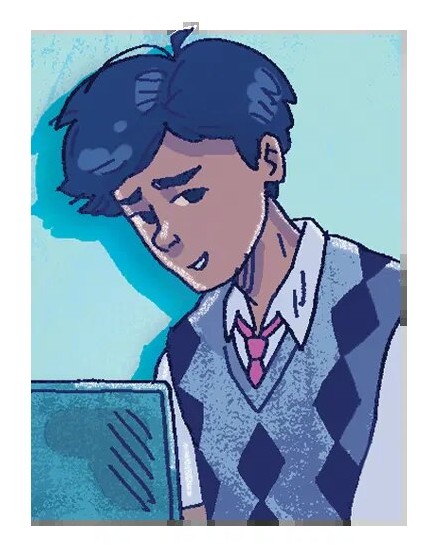
That is precisely the space Accidental Tribes was built to occupy. The illustrated YA mystery by C.S. Pascoal, published by Prospera Books, follows eight teenagers sent to a forgotten classroom called Solitaria, where group dynamics, identity, and the pressure to conform collide with real consequences, including an unsolved death and institutional lies. The ensemble of eight distinct characters gives readers multiple entry points: the teen who goes along, the one who pushes back, the one who stays quiet and watches. Reading it together gives parents and teens a shared cast of characters to discuss, one that isn’t anyone’s real life, but feels close enough to matter.
Free classroom discussion guides accompany the book, giving educators a structured way to use it for discussions around peer influence, digital citizenship, and identity. Free first chapters are available online, so you can start the conversation this week. And unlike a lecture or a worksheet, a good story doesn’t feel like homework.
Start with the conversation you can have today
You don’t need a perfect opening line to begin talking to your teen about peer pressure. You need a car ride, a walk, or a quiet moment before bed. Start with curiosity. Ask what people at school usually do when someone says no to something. Listen more than you talk. Validate before you advise.
The goal isn’t one perfect conversation. It’s a posture: ongoing, low-pressure, nonjudgmental check-ins that build trust over time. That trust is what makes your teen call you when things go sideways at a party or in a group chat at midnight. Build it in the ordinary moments, and it will show up in the hard ones.
If you’re looking for a way in, pick up Accidental Tribes and read it alongside your teen. Talk about the characters. Talk about the pressure they face in Solitaria. You may be surprised how quickly the conversation moves from a fictional classroom to something much closer to home.
Frequently Asked Questions
Will a code word really make my teen call me when they need help at a party or in a car?
A code word removes a major barrier to teens calling for help by guaranteeing no immediate lecture. Set the terms in advance and honor the plan every single time so your teen trusts it will work.
Can reading a novel actually open up conversations about peer pressure with my teen?
Yes. Fiction lowers defenses and gives you a neutral conversation starter by letting your teen discuss characters instead of themselves. Accidental Tribes works well for this: its ensemble cast and free classroom guides give multiple entry points, and free first chapters are available online.
Where and when should I try to have these peer pressure conversations with my teen?
Use car rides, walks, side-by-side activities, or quiet moments before bed rather than formal sit-down talks. Those in-between settings tend to feel less pressured and produce more honest conversations.
How can we practice refusal scripts without making it awkward?
Keep practice short, framed as a quick drill, and let your teen choose wording that sounds like them. Keep role-play under five minutes, coach with prompts like “Which response sounds most like you?”, and run brief scenarios so the language comes automatically when it’s needed.