Many readers of multi-character YA stories describe chasing a very specific feeling. You finish the last page and realize you weren’t just following the main character. You were the anxious overachiever covering up a secret, the funny one who never lets anyone get too close, and the quiet kid in the back row who notices everything. That collision of selves is exactly what makes ensemble cast YA fiction so hard to put down, and so hard to forget.
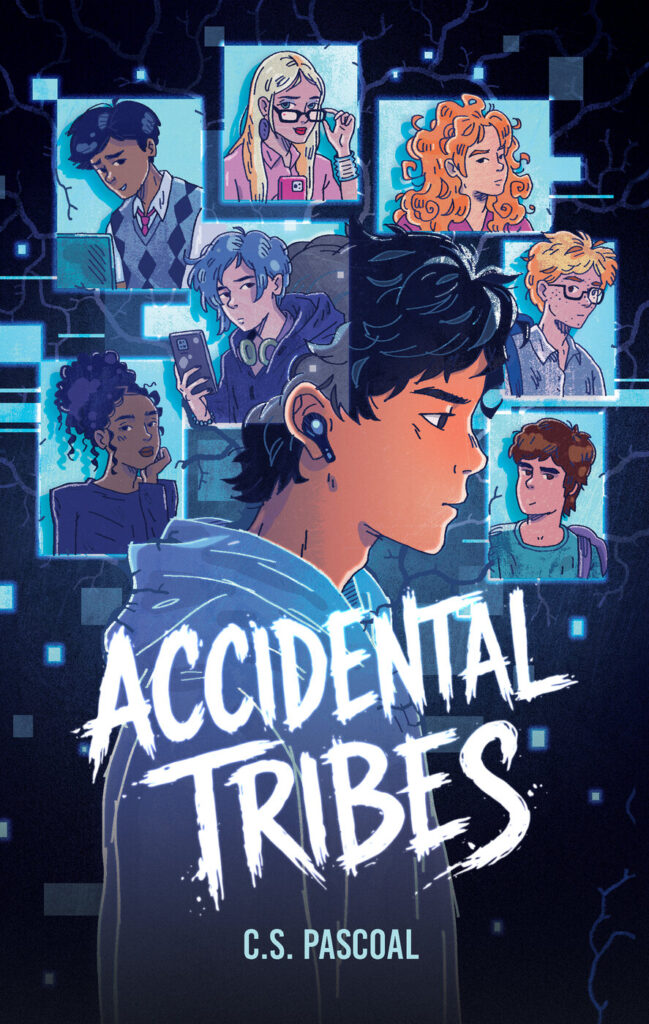
Below you’ll find a curated, numbered list of 12 ensemble cast YA fiction titles that do group-driven storytelling exceptionally well, from the novels that built the genre to newer releases earning serious attention from readers and educators alike. You’ll also get a clear framework for what “ensemble cast” actually means, guidance on matching books to age and theme, and a few practical notes for writers building their own multi-character stories. One 2026 title worth noting right away: Accidental Tribes by C.S. Pascoal, published by Prospera Books in September 2026, which has drawn strong praise from educators and teen readers.
Why ensemble cast YA fiction hits different for teen readers
The mirror effect: finding yourself in more than one character
Adolescence isn’t a single experience. It’s more like being several people simultaneously, each one competing for attention inside the same body. A teen reader might share Bronwyn’s anxiety about grades, Cooper’s fear of disappointing people, and Addy’s desperate need to belong, all in the same afternoon. When the protagonist role is distributed across a group, readers get more entry points into the story and more chances to recognize themselves. That fragmentation feels normal and seen rather than alarming.
The “who do I trust?” hook that keeps every page turning
Beyond identity, ensemble stories run on suspicion. When four or eight characters share the narrative, readers constantly measure what each person reveals, hides, and misremembers. That dynamic is especially addictive in mystery and thriller YA, where a single lie from one narrator can reframe everything you thought you knew about the others. It’s the kind of structural tension that turns a planned one-weekend read into a one-night read.
What actually defines ensemble cast YA fiction
Ensemble vs. multiple narrators: not the same thing
A novel can rotate through six narrators while still being fundamentally one protagonist’s story. True ensemble cast YA fiction distributes plot agency, emotional arcs, and thematic weight across the group. No single character could be removed without breaking the story. If your reaction to a “multiple POV” recommendation is “it felt like everyone else was just supporting one main person,” you probably got a solo-protagonist story wearing an ensemble costume.
The structural forms YA authors use most often
Rotating close POV chapters are the most recognizable structure in young adult books with multiple POVs, typically alternating first-person or close-third-person narrators. The genre experiments constantly, though: Illuminae by Amie Kaufman and Jay Kristoff reconstructs its story through documents, transcripts, and surveillance records. Other novels use interlocking timelines, omniscient narration, or alternating first-person voices. Understanding these forms helps readers explain why two ensemble novels can feel so structurally different from each other, and gives writers a map of the creative territory still available to them.

12 ensemble cast YA fiction picks, the full list
Mystery and thriller ensembles: trust nobody
1. One of Us Is Lying by Karen M. McManus (2017)
The clearest entry point for readers new to ensemble cast YA fiction. Four students become murder suspects after a fifth dies during detention, and each narrator has something to hide, a reason to lie, and just enough vulnerability to keep you from writing them off. Content notes: bullying, blackmail, suicide-related material, family abuse. A tightly controlled locked-room setup that proves every character’s secret has equal weight in a well-built ensemble mystery.
2. We Were Liars by E. Lockhart (2014)
A tight group, a traumatic event, and a narrative that withholds the key fact until the reader has been fully invested in caring about the wrong version of events. This is ensemble cast YA fiction that weaponizes reader trust. Content notes: grief, substance use, a traumatic death. One of the most studied examples of unreliable ensemble narration in the YA genre.
3. The Thousandth Floor by Katharine McGee (2016)
A near-future Manhattan skyscraper drops a socially stratified ensemble into the same DNA as McManus and Lockhart, where privilege, ambition, and a fatal fall drive every chapter. Five narrators, five social positions, and one event none of them can escape. Content notes: substance use, sexual content, violence.
Fantasy and friendship ensembles: stronger together
4. Six of Crows by Leigh Bardugo (2015)
The most-referenced standard for ensemble fantasy YA: six criminals with distinct skills, competing motives, and painful histories who need each other to pull off an impossible heist. Each character’s absence would cost the group something irreplaceable, the clearest sign a cast genuinely earns its size. Content notes: violence, trauma, criminal activity, mature themes.
5. The Sisterhood of the Traveling Pants by Ann Brashares (2001)
Distributes the narrative across four best friends separated for a summer, with friendship itself as the plot’s central engine. Less plot-twist-driven than others on this list, but a foundational example of how ensemble cast YA fiction can work through emotional rather than thriller mechanics. Suitable for readers as young as 12 or 13.
6. The Diviners by Libba Bray (2012)
A supernatural thriller lens applied to a 1920s New York ensemble, where each character’s gift and secret slowly converge into a shared confrontation with something genuinely dangerous. One of the best examples of how historical setting can give each ensemble member a distinct social position that shapes what they can risk. Content notes: violence, occult themes, racial injustice depicted in historical context.
Recent ensemble cast YA novels with multiple POVs raising the bar
7. Firekeeper’s Daughter by Angeline Boulley (2021)
Winner of the Michael L. Printz Award. Daunis, an eighteen-year-old Ojibwe teenager drawn into an FBI investigation, is surrounded by a community whose relationships, knowledge systems, and histories actively shape what the ensemble understands about the crime. Identity isn’t background detail here, it determines who trusts whom and what each character can risk. Content notes: drug use, violence, sexual assault (not graphic).
8. The Sunbearer Trials by Aiden Thomas (2022)
A diverse group of teenagers competes in a mythologically rooted trial where disability, gender identity, and class shape alliances and betrayals in ways a single-protagonist story couldn’t carry. One of the most deliberate recent examples of using ensemble structure to make representation functional rather than decorative. Content notes: violence, death, LGBTQ+ themes.
Ensemble-driven romance and rivalry that feel real
9. Highly Suspicious and Unfairly Cute by Talia Hibbert (2023)
Two formerly close teenagers in a wilderness survival competition, with alternating perspectives that make their misunderstandings feel genuinely earned rather than contrived. A strong pick for readers who want ensemble cast YA fiction with romantic tension rather than crime. Content notes: mild language, brief sexual references, anxiety/mental health themes.
10. The Counselors by Jessica Goodman (2022)
When Goldie’s boyfriend is found dead in the lake at an elite summer camp, she and her two best friends, fellow counselors, are pulled into the mystery, and each girl’s social position shapes what she can afford to know, say, and risk. The emotional resolutions feel earned rather than manufactured because the group dynamic is the mechanism, not the backdrop. Content notes: bullying, death, alcohol use.
11. The First to Die at the End by Adam Silvera (2022)
Pushes structural ambition further than most YA ensemble novels with multiple narrators: interlocking timelines mean what happens to one character actively changes the meaning of what happens to another. A technically sophisticated pick for readers ready for more experimental ensemble fiction. Content notes: death, grief, LGBTQ+ themes, violence.
The 2026 ensemble pick for fans of the genre
12. Accidental Tribes by C.S. Pascoal (Prospera Books, September 22, 2026)
Eight defiant teenagers placed in Solitaria, a forgotten classroom where buried secrets about an unsolved death, stolen funds, and institutional lies slowly surface. The eight characters are genuinely distinct: their separate misconduct, personal struggles, and relationships to the truth drive both the mystery and the group’s reluctant transformation into something like a community. The Solitaria premise works the same way a locked room does in a classic mystery: containment maximizes tension, and every character’s secret becomes everyone’s problem. Content notes: AI misuse themes, cyberbullying, institutional deception, teen grief.
Accidental Tribes: the 2026 ensemble YA fans of the genre need to know
Eight characters, one forgotten classroom, zero trust
If you loved One of Us Is Lying or We Were Liars, the structural DNA of Accidental Tribes will feel immediately familiar: a group forced together by circumstances, each member hiding something, and an investigation that keeps rewriting what you thought you knew. What distinguishes it from those predecessors is its engagement with genuinely contemporary stakes, AI misuse, viral humiliation, hacked systems, and social media addiction, filtered through eight teenagers who didn’t choose each other but can’t solve anything alone.
Why it delivers the same “who do I trust?” energy fans love
The Teen Advance Reader Council praised the book’s humor and plot twists, and its ability to make readers reconsider the people around them. The book received prepublication endorsements for its sharp mystery plotting and its value as a classroom conversation starter around digital citizenship and belonging. Classroom and library educator guides are available for teachers building units around AI literacy and teen identity.
How to pick the right ensemble YA fiction, and a quick note for writers
Matching ensemble books to your reader (themes, age range, content notes)
Middle-grade ensemble fiction typically centers on friendship, loyalty, and school community, with difficult subjects handled at an age-appropriate depth. YA ensembles raise the stakes significantly: mental health, trauma, crime, romance, and moral ambiguity are standard territory. The content notes listed with each title above give you a starting point, but publishing has no standardized warning system, so they vary widely by source.
Reader-maintained databases like Common Sense Media and StoryGraph, combined with professional review sources like School Library Journal or Kirkus, give librarians and parents the most reliable baseline. Always verify against the book itself or a trusted library guide before putting a title in a student’s hands.
Three questions every ensemble writer should answer before drafting
If you’re building your own multi-character story, work through these before you touch the manuscript. First: what is each character’s unique narrative job, the skill, secret, or perspective no one else in the group supplies? Second: if you removed this character entirely, what would break? If the honest answer is “not much,” combine, deepen, or cut. Third: does each character’s arc change because of the group, not just alongside it? The strongest ensemble climaxes require every character’s changed relationship and individual choice to carry real weight. If one character’s arc could unfold the same way in a completely different book, the ensemble isn’t doing its full work yet.
The genre that refuses to simplify the teen experience
The best YA novels with ensemble casts work because they refuse to flatten adolescence into one person’s perspective. They hold space for the anxious overachiever, the guarded class clown, the kid nobody notices until they’re gone, and the one who knows more than anyone suspects. That breadth is both the format’s challenge and its greatest gift.
Whether you’re reading for escape, shopping for a reluctant teen reader, or building your own multi-character story, ensemble cast YA fiction rewards the attention you bring to it. The titles on this list range from foundational classics to recent award-winners, and they share one quality: every character in them matters to how the story ends.
Accidental Tribes by C.S. Pascoal carries that tradition into 2026 with genuine urgency, tackling the AI and social-media realities of today’s teenagers through eight voices that earn their complexity. Free first chapters are available on the book’s website, so start there if you’re curious.