
Teen social identity is a teenager’s working answer to “who am I within my social world?” It forms through peer relationships, group membership, and the feedback teens receive, online and off, about who they appear to be. The process is normal, necessary, and often uncomfortable. What shapes teen social identity, and how adults can support it without steering it, is worth understanding clearly.
Identity formation spans roughly ages 10 to 21, intensifying during the high school years. At the center of that process sits a tension every teenager knows: the pull between expressing who you actually are and performing who your social world needs you to be. Researchers study that gap with data. Novelists sometimes map it from the inside. C.S. Pascoal’s Accidental Tribes (Prospera Books) does the latter, following eight teenagers whose identities collide in a forgotten classroom with nowhere left to hide. That tension, and what to do with it, runs through everything below.
Key takeaways
- Identity forms gradually: Adolescent identity development spans ages 10 to 21, with the most intense exploration typically happening between 15 and 17.
- Peers are the mirror: Group belonging helps teens test identities and receive feedback, but controlling peer groups can pressure teens to suppress who they actually are.
- How matters more than how much: Active, expressive social media use is associated with stronger self-concept; passive browsing and comparison-driven use are linked to lower self-esteem.
- Performance and identity drift: When the curated online self drifts far from the real one, teens feel the gap as identity discomfort, not just low confidence.
- Know the warning signs: Persistent sadness, markedly unstable self-image, withdrawal, and self-harm are patterns that cross from exploration into distress requiring professional support.
- Adults have real leverage: Autonomy-supportive parenting, mastery-oriented classrooms, and narrative-based approaches all have evidence behind them for supporting healthy identity development.
What exactly is teen social identity, and when does it form?
Erikson described the central adolescent task as identity versus role confusion, roughly spanning ages 12 to 18: teenagers try out different roles and gradually build a coherent sense of who they are. James Marcia extended that framework into four identity patterns, which are better understood as moveable positions than fixed stages. A teen can shift between them as their circumstances change.
Those four patterns are diffusion (little exploration or commitment), foreclosure (commitment without much exploration), moratorium (active exploration without commitment yet), and achievement (exploration followed by genuine commitment). A teen who tries theater, quits, joins track, quits again, and hasn’t settled anywhere is in moratorium. That’s healthy. The goal isn’t to rush toward commitment; it’s to make the exploration feel safe enough to actually happen.
The age-by-age picture looks roughly like this. In early adolescence (ages 10 to 14), teens compare themselves to peers, experiment with appearance and interests, and begin separating their sense of self from their parents’ identity. In middle adolescence (ages 15 to 17), peer influence is strong, abstract thinking increases, and teens actively explore values, friendships, sexuality, and possible futures. By late adolescence (ages 18 to 21), most young people move toward a more stable self-concept and become more future-oriented, though education, work, and relationships continue reshaping identity well into the twenties.
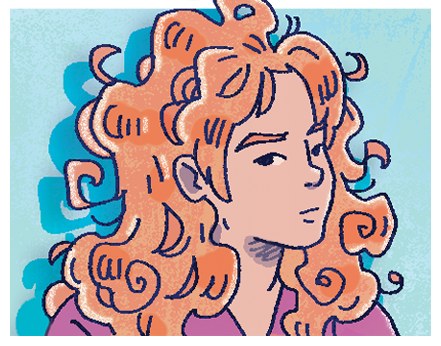
Peer influence and teen social identity
The adolescent brain is wired to prioritize social acceptance. Belonging to a group engages reward-related neural circuits in ways that make social connection feel as urgent as other core needs. The problem isn’t that teens care about belonging. The problem is when belonging comes with an identity tax: be this version of yourself, or you’re out.
Identity and self-esteem: what healthy peer influence looks like
Healthy peer influence looks like picking up new interests, adopting shared values, and adjusting how you communicate. That’s social mirroring, and it’s how identity gets tested and refined.
What’s different, and more concerning, is the shift into identity suppression: quietly abandoning genuine interests, performing a persona that earns approval, and never quite feeling like yourself in the rooms you’re supposed to belong to. A teen who loves writing but joins the sports crowd and stops writing is navigating exactly that tension. The interest didn’t disappear. It just became too risky to carry.
By late high school, broad crowd labels generally lose their grip, and more personal commitments and chosen relationships become more defining. But in middle school especially, acceptance within a group can feel like the entire project. Adults who understand that aren’t dismissing peer pressure as superficial. They’re taking it seriously enough to work with it.
What is social media actually doing to teen social identity?
The strongest pattern from recent research is not that social media is uniformly harmful. It’s that how teens use it matters more than how much time they spend on it. A 2023 systematic review by Senekal and colleagues found that social media can support adolescents’ psychosocial development and identity exploration, but that comparison-oriented use and online appearance consciousness were particularly damaging to self-esteem. Other recent research points the same way: active, expressive, and socially supportive interactions are more often associated with confidence and belonging, while passive browsing and upward comparison are linked to lower self-evaluation.
That’s a meaningful distinction. A teen posting their own creative work and connecting with people who share their interests is using social media differently than a teen scrolling through curated highlight reels and measuring themselves against strangers. The same platform, different experience, different outcome.
Digital identity for teens: who carries the heavier burden
Some teens carry a heavier identity burden online than others. According to a 2022 Pew Research Center report, Black teens were more likely to say their race or ethnicity motivated online harassment (21%) compared with Hispanic teens (11%) and White teens (4%), and older teens (ages 15 to 17) were more likely than younger teens to report appearance-based cyberbullying. A 2025 Pew report found teen girls were more likely than boys to say social media has hurt their mental health (25% versus 14%). These aren’t edge cases. Adults who want to check in more intentionally know which teens to prioritize.
Why do teens perform online instead of just being themselves?
Teens don’t post who they are. They post who they want to be perceived as. Research describes social media as a “digital social mirror”: teens present an idealized version, watch for feedback, and adjust. Positive feedback validates the performance. Negative feedback or silence does the opposite. Over time, the curated self can drift far from the real one, and teens feel that gap not just as low self-esteem but as identity discomfort, a persistent sense that the version of themselves they’re maintaining isn’t quite them.
This is where Accidental Tribes earns its place in a conversation like this one. C.S. Pascoal’s novel, published by Prospera Books, puts eight teenagers in a forgotten classroom called Solitaria with no audience to perform for and no algorithm to please. The book follows eight distinct teenagers who represent diverse struggles around identity and belonging. The book doesn’t lecture teens about identity. It drops them into it. Fiction that names the tension makes it easier for teens to talk about it in real life, which is exactly what makes this novel useful for classroom discussion or a family read.

When does identity exploration become a mental health concern?
Normal identity exploration looks like trying things, changing direction, and feeling uncertain. That discomfort is part of the process, not a sign that something is wrong. Concern rises when distress is intense, persistent, worsening, or begins to interfere with school, relationships, and daily functioning.
Warning signs to watch for include:
- Persistent sadness, shame, or hopelessness
- A markedly unstable or negative self-image that doesn’t lift
- Repeatedly shifting identity alongside desperation to fit in
- Withdrawal from relationships and activities a teen used to care about
- Major changes in sleep, appetite, or energy
- Self-harm, substance use, or disordered eating
A single sign isn’t a diagnosis. Look for a pattern lasting weeks or months, increasing in severity, and disrupting daily life.
If a teen expresses thoughts of self-harm or suicide, do not leave them alone. In the U.S. and Canada, call or text 988. Normalize professional help as a next step, not a last resort. A pediatrician or qualified mental-health clinician can assess whether depression, anxiety, trauma, or another condition is making the identity work harder than it needs to be.
What parents, teachers, and counselors can actually do
At home, autonomy-supportive parenting has consistent evidence behind it: explain rules, offer real choices, take teens’ views seriously, and distinguish guidance from control. Reflective listening helps more than advice-giving. Ask “What matters most to you about that?” rather than jumping to “Here’s what I think you should do.” Give specific, process-focused feedback, praising effort, persistence, and growth rather than fixed traits.
Create regular, low-pressure family conversations about values, goals, and setbacks. Narrative approaches that connect past experience to present identity and future hopes have support in the research literature. Avoid comparisons to siblings or peers, appearance-based feedback, and conditional approval.
In school, the strongest evidence supports multi-component approaches rather than generic self-esteem programs. Mastery-oriented classrooms that emphasize improvement over ranking, allow revisions, and avoid publicizing grades are associated with healthier self-concept. Structured identity-exploration curricula, like guided discussions on culture, values, and future goals, show consistent gains in identity clarity and socio-emotional adjustment.
A meta-analysis of 144 experimental studies found that self-affirmation exercises, where students briefly reflect on personally important values or strengths, had a small positive effect overall on students’ well-being and outcomes. Cooperative learning, peer mentoring, and rotating group roles give teens repeated, authentic experiences of competence and belonging.
In clinical settings, narrative therapy and structured life-story work can help teens develop a coherent sense of teen social identity when fragmentation is the presenting problem. Group therapy provides corrective peer experiences for teens who feel isolated in their confusion. Cognitive-behavioral methods that target harsh self-judgment and comparison-driven thinking are well-supported. Always affirm rather than prescribe: help teens explore identities safely, not arrive at a preferred outcome.
The adult’s role isn’t to manage the process
Teen social identity develops through trial, comparison, failure, belonging, and reflection over years. No parent, teacher, or therapist fully controls where it lands, and that’s the right design. The adult’s role isn’t to manage the process. It’s to make the process safer to navigate.
When a teen has at least one adult who listens without correcting, at least one space where they don’t have to perform, and at least one story that names what they’re going through, they’re already better positioned than most. The research offers strategies. The warning signs offer guardrails. Fiction, at its best, offers something the research can’t: company. Accidental Tribes was built to be exactly that: a story for teens who are figuring out who they are and adults who want to understand what that actually looks and feels like from the inside.
Frequently Asked Questions
What quick classroom practices can teachers use to support identity work?
Teachers can use mastery-oriented practices, self-affirmation exercises, and cooperative learning. Emphasize improvement over ranking, allow revisions, use brief values reflections, rotate group roles, and offer peer mentoring to build competence and belonging.
Which teens carry a heavier identity burden online?
Some groups report more online harm: Black teens, teen girls, and older teens show higher rates of targeted harassment or appearance-based cyberbullying. Those patterns mean adults should prioritize checking in with these teens more intentionally.