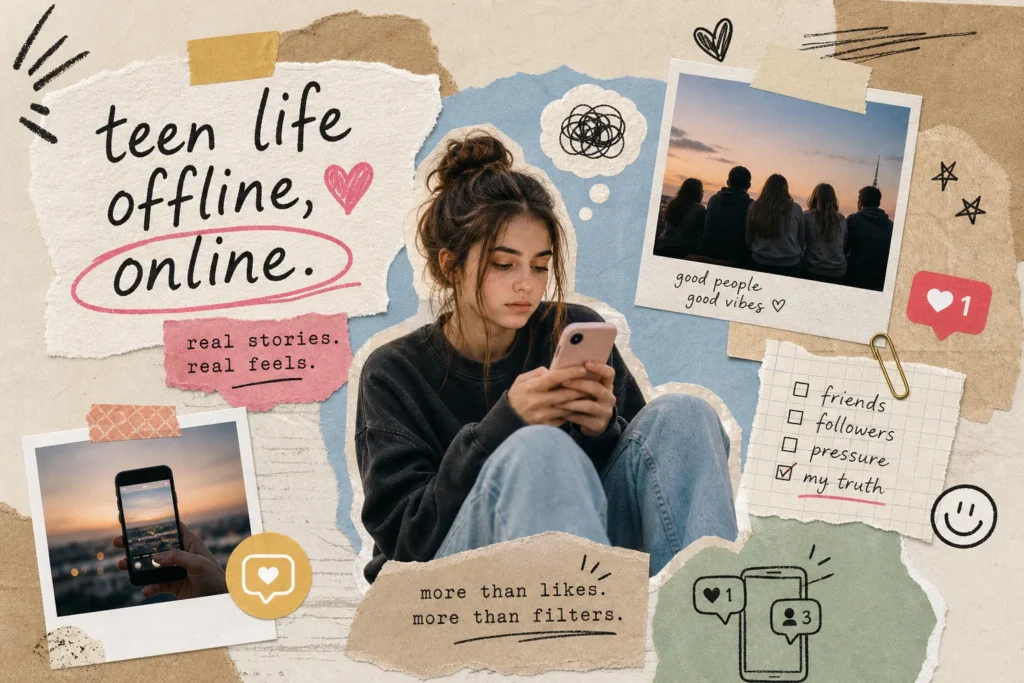
Your phone buzzes. One notification. One screenshot shared to the wrong group chat. By Monday morning, 300 people have seen it, and nobody is looking at you the same way. Many readers and critics argue that young adult fiction has become remarkably good at capturing exactly this emotional reality, and it’s why this roundup of 18 YA novels about social media exists. These books go where PSAs won’t, and they don’t flinch.
YA doesn’t sanitize this. The best books in the social media fiction space don’t end with a school assembly and a healthy resolution. They dramatize, they spiral, and they hit with the kind of accuracy that makes teen readers feel genuinely understood instead of gently warned at. That’s an opinion, but it’s one backed by the sheer volume of teen readers who seek these titles out by word of mouth, not assignment.
This roundup covers 18 YA novels organized across three themes: cyberbullying and online humiliation, influencer culture and viral fame, and online identity. Each entry includes the central social-media mechanic, age guidance, and where to find it. One title worth flagging upfront: Accidental Tribes by C.S. Pascoal (Prospera Books), which launched September 22, 2026, and embeds all three themes inside a single mystery plot, but more on that shortly.
Why social media has taken over YA fiction
Before 2010, teen novels were built around first love, high school drama, and the occasional supernatural interruption. Those same stories still exist; they just run through DMs, anonymous accounts, and viral posts now. The genre didn’t change its subject matter so much as update its setting to match where teen life actually happens.
YA is uniquely positioned to carry this material because it’s written for the age group living it in real time. The emotional triggers built into social media (validation, humiliation, identity crisis, FOMO, the seductive pull of being seen) aren’t background noise in these books. They are the plot.
Why teens trust these stories more than any PSA
The best YA social media fiction doesn’t lecture. It doesn’t sound like it was written by an adult who has never been on TikTok and means well but sounds like it. These books dramatize how an anonymous post spirals, how a viral moment feels from the inside, and how a DM from the wrong person rewires an entire social world. Teens respond to that kind of mirror. That’s what separates social media fiction for teens from the after-school-special version of the same story.
What separates a good social media novel from a forgettable one
The test is whether social media drives the plot or just decorates it. The forgettable books use Instagram as set dressing. The great ones make the platform itself a character, with its own logic, seductions, and consequences. Take Eliza and Her Monsters: the webcomic platform isn’t backdrop; it’s the entire architecture of the protagonist’s identity. Every YA novel about social media on this list clears that bar.
YA novels about social media and cyberbullying
This is the darkest corner of the genre, and the best YA books about cyberbullying don’t look away. These titles show what a single post, screenshot, or hacked account can do inside a school community, and they resist the clean resolution that real life rarely offers.
Unfriended by Rachel Vail (2014): A protagonist turned social pariah after a rejected friend retaliates online. Ages 11 and up (editorial guidance; verify with publisher).
Want to Go Private? by Sarah Darer Littman (2011): Online grooming by an adult predator and the escalating danger that follows, built into a plot that doesn’t let you look away. Suggested for ages 14 and up (editorial guidance).
#Scandal by Sarah Ockler (2014): A hacked Facebook account and the public fallout that follows.
The Rumor Game by Dhonielle Clayton and Sona Charaipotra (2022): Slut-shaming and cyberbullying at an elite prep school; carries the most serious content in this group.
People Like Us by Dana Mele (2018): Cyberbullying baked into a prep-school murder mystery.
Bombshell by Rowan Maness (2017): Cyberstalking and exposed digital secrets, with a plot that keeps escalating.
Books that show what a single post can actually destroy
The strongest titles here resist tidy endings, because real cyberbullying doesn’t wrap up with a group hug and a lesson learned. These books honor the messiness of what actually happens when your social world gets rearranged by something you can’t unsend.
Content warnings and age guidance for this category
The Rumor Game carries explicit warnings for cyberbullying, past self-harm, sexual abuse, and sexual assault, best suited for ages 16 and up with adult context. Unfriended is less severe but still addresses online harassment directly, and Want to Go Private? deals with online grooming, so it calls for adult context too. Pre-reading is strongly recommended before assigning anything from this section to readers under 14.
YA novels about influencer culture and going viral
These books run on a different emotional frequency. They’re about the seduction of being seen, the hunger for followers, the way the algorithm can give you exactly what you thought you wanted, and what you discover about yourself once you have it. Young adult books about influencers have multiplied in the last decade because the subject keeps getting more urgent, not less.
Girl Online by Zoe Sugg (2014): A teen whose anonymous blog goes viral; it works because Sugg understood that world from the inside. Ages 13 and up (editorial guidance).
#Famous by Jilly Gagnon (2017): A photo goes viral, a boy becomes accidentally internet-famous, romantic comedy on the surface with real emotional stakes underneath.
Not Your #LoveStory by Sonia Hartl (2020): Built entirely around a viral incident and the online attention nobody actually prepares for.
Tweet Cute by Emma Lord (2020): A corporate Twitter war that becomes unexpectedly personal, with genuine wit throughout.
My Life as a Hashtag by Gabrielle Williams (2017): A grounded look at digital identity and what online attention actually costs.
Tag, You’re Dead by Kathryn Foxfield (2022): Influencer streaming meets genuine thriller stakes; the natural bridge into the mystery-forward category.
When the follower count becomes the whole personality
What these books consistently expose is the gap between being popular and being seen, and why those two things feel identical at 16 until they suddenly don’t. That gap is where all the best scenes live, and it’s what makes readers who have never chased followers still feel every page.
The thriller side of influencer fiction
Tag, You’re Dead is the entry point for readers who want social media stakes without the romantic comedy packaging. If the influencer dynamics are the hook, the mystery shelf is the logical next stop.
YA novels about online identity and the double life
The third emotional lane in this genre belongs to books about teens who build entire identities online that feel more real, more free, or more honest than who they are in the hallway. These are the most psychologically complex entries on the list, and often the ones readers finish and immediately recommend to someone else.
Eliza and Her Monsters by Francesca Zappia (2017): A teen secretly famous as a webcomic creator, navigating what happens when online identity and real-life relationships collide. It holds a 4.14 Goodreads rating across 55,000-plus ratings, earned YALSA’s Best Fiction for Young Adults in 2018, and landed on Kirkus Reviews’ best books of 2017. Ages 13 and up (editorial guidance).
The Subtweet by Vivek Shraya (2020): An adult novel about internet-famous musicians whose friendship is destroyed by a single tweet; best for older teens and adults who remember exactly how that feels.
Influenced by Sarah Darer Littman and Cindy L. Otis (2025): A teen whose worldview gets quietly reshaped by an influencer’s content; one of the most current entries on this list.
Perfect on Paper by Sophie Gonzales (2021): A teen running an anonymous dating-advice operation, with all the complications that follow.
Worthy by Donna Cooner (2017): Sits at the intersection of online identity and self-worth.
When your profile feels more honest than your actual face
Readers who connect with books in this category often describe the relief of seeing their digital double-life reflected back without judgment. Eliza and Her Monsters does this better than almost anything in the genre: it treats the online self as equally valid to the offline one, then forces the question of what happens when they have to coexist.
What these books reveal about belonging and performance
These are the books readers say “wrecked them in the best way.” They deal with the exhausting performance of being a person in public, which is, for a teenager in 2026, basically a full-time unpaid job. The best ones don’t offer solutions. They offer company, and sometimes that’s the more useful thing.
Why Accidental Tribes does something this genre rarely does
Most YA novels about social media put the platform at the center of a character study. Accidental Tribes by C.S. Pascoal (Prospera Books, launched September 22, 2026) does something structurally more ambitious: it buries social media addiction and anonymous-account culture directly inside a mystery plot. The platform functions simultaneously as murder weapon, alibi, and red herring, and it never once stops to explain itself to you.
The story follows eight defiant teenagers assigned to a forgotten classroom called Solitaria, where they uncover an unsolved death, stolen funds, and layers of institutional deception. It’s fast-paced and illustrated, and it moves with thriller energy rather than message-novel energy. C.S. Pascoal brings both literary and educational credibility to the project. Recommended for ages 13–18; thriller-level tense, but it does not carry the same content warnings as the cyberbullying category.
Social media addiction built into a whodunit
The anonymous accounts in the book don’t sit in the background; they drive plot twists, shift suspicion between characters, and function as a form of evidence. Readers who loved the social-media dynamics in One of Us Is Lying by Karen M. McManus will recognize the energy. But Accidental Tribes pushes the mechanic further: digital behavior becomes forensics. What you posted, when you posted it, and whether your account lines up with your alibi: all of it matters to solving the case.
How to get it and read the early chapters
It’s available now, and free first chapters are accessible online for anyone who wants to sample the book before committing. The launch was timed for back-to-school season, and classroom and library discussion resources are ready for educators building digital citizenship units or book clubs around the themes on this list.
How to find and read any book on this list
Getting your hands on these books is easier and cheaper than it used to be. Most mainstream titles here are available through two main routes: free through your library or direct purchase through a retailer.
Free library access through Libby and OverDrive
Download the Libby app, sign in with your library card, and search the title. Many entries on this list are available as eBooks or audiobooks through public library systems at no cost, though availability varies by library and licensing. If a title shows as unavailable or waitlisted, hit the hold button or submit an acquisition request through your library’s system; most libraries process these within a few weeks.
Where to buy, borrow, or gift these books
For direct purchase, Amazon, Barnes and Noble, and Bookshop.org all carry the titles on this list. Bookshop.org routes a portion of each sale back to independent booksellers, which makes it worth considering if you have the choice. Physical, eBook, and audiobook formats exist for most titles here. Accidental Tribes is available now with free sample chapters online: a strong gifting option, a smart classroom acquisition, and a personal read that covers more social media territory than anything else on this list.
The list that doesn’t end when the book does
Social media isn’t going anywhere, and neither is the emotional weight it puts on teenagers. The best YA fiction about it doesn’t pretend otherwise; it sits inside that weight and helps readers make sense of it, whether the reader is 14, the parent of someone who is, or a teacher looking for Monday’s classroom text.
The three lanes on this list cover the full spectrum: cyberbullying and humiliation for the darkest, most unresolved territory; influencer culture for the seductive side of digital life; and online identity for the most psychologically layered reading experiences. Pair a cyberbullying title with an identity novel and you get the full picture, both ends of what social media actually does to a person, in a way that neither category delivers on its own.
Accidental Tribes is the one title on this list that pulls all three lanes into a single gripping mystery. No lecture energy. Just a plot that makes you need to know what happened, and characters whose digital behavior tells you more about them than anything they say out loud. If you want one place to start exploring these 18 YA novels about social media, that’s the one. Order it now or read the first chapters free, or pass this list to someone who needs exactly one of these books and hasn’t found it yet.