
Classroom
Novel Study Ideas for Middle School: A Teacher’s Guide
Novel study ideas for middle school: a pacing framework, pre-reading activities, character mapping, discussion questions, and ways to differentiate.
Category
Classroom-ready YA novels, lesson ideas and resources for teaching digital citizenship and AI literacy.
Classroom
Novel study ideas for middle school: a pacing framework, pre-reading activities, character mapping, discussion questions, and ways to differentiate.

Classroom
Literature circle ideas for high school: rotating roles, a four-week pacing plan, discussion activities, book picks, a fair rubric, and simple templates.
Classroom
Book club questions for YA novels that get teens talking: a theme-based framework, sample prompts from Accidental Tribes, and a 60-minute meeting plan.
Classroom
How to start a teen book club that lasts: the right format and group size, books teens choose themselves, discussion ideas, and the safety basics.
Classroom
If your digital citizenship lesson isn't sticking, you're not alone. Here are ten common reasons lessons fall flat, and practical fixes teachers can use right away.
Classroom
Ten 15- to 30-minute classroom activities on privacy, upstanders, fact-checking, algorithms, and AI-generated media for middle and high school students.
Classroom
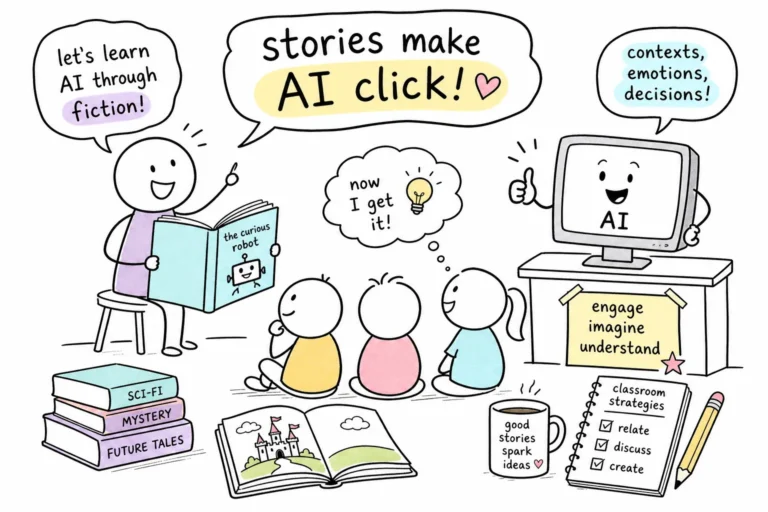
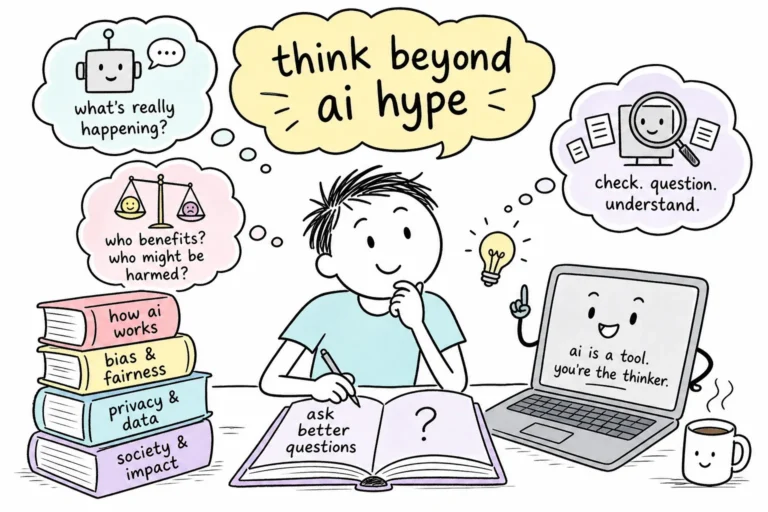
How teachers can use novels and short stories to teach AI literacy: texts by grade band, three discussion strategies, a safe generative AI demo, standards alignment, and a rubric that rewards reasoning over polish.
Classroom
Fiction and nonfiction picks that help high schoolers question the AI systems shaping their lives, with classroom pairings, free resources, and three discussion hooks that work with any title.

Classroom
Grade-by-grade picks for teaching identity in grades 6 to 12, with discussion questions, two low-prep activities, and ideas for ELL students and reluctant readers.
Classroom
A teacher's guide to YA novels that hold up in class, sorted into three teachable themes (identity, technology, and justice), with grade levels, discussion ideas, and writing prompts.
Classroom
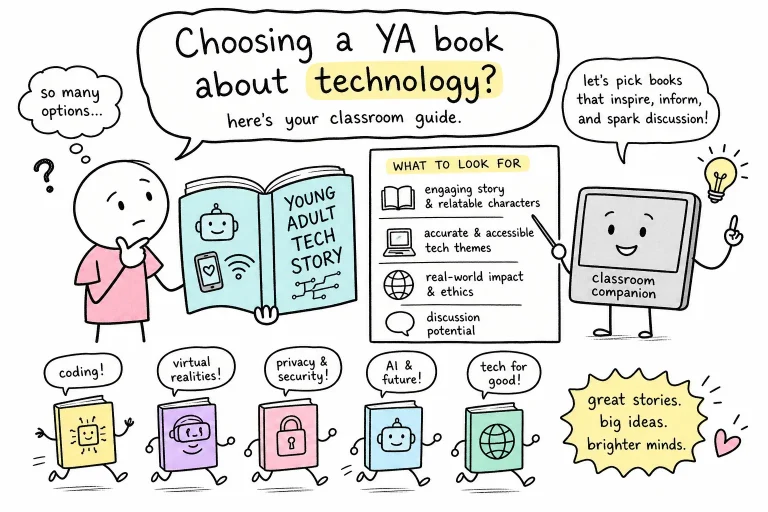
If you've ever stared at a list of YA novels wondering how to choose a YA book for a high school classroom unit on technology, you already know the problem. You've got the theme, a rough timeline, maybe even a standards cluster in mind. But then the confidence drains out. Dozens of options, all of them with glowing reviews, none of them obviously right for your specific group of fifteen-year-olds in your specific school in your specific semester. That moment isn't a failure of knowledge. It's a failure of criteria. No one taught most of us how to evaluate books on a teaching axis rather than a reading one.
Classroom
Here's a confession most middle school teachers will recognize: you spend a weekend hunting for a novel that actually addresses screen time, AI misuse, or cyberbullying, and what you find is a story where a wise adult sits a teenager down and explains the dangers of the internet for three paragraphs. Your students will smell the lesson coming before you've finished reading the back cover. They'll be polite about it. They will not care.